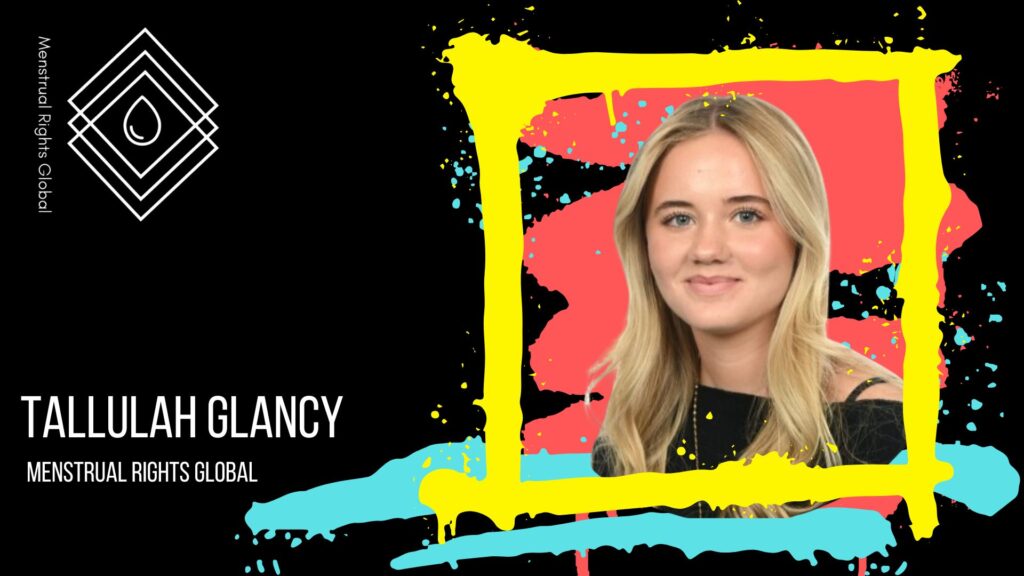
Tallulah Glancy, Youth Council, Menstrual Rights Global
This week, as the global health community convenes for the 79th World Health Assembly in Geneva, discussions around health financing, pandemic preparedness, equity and multilateral cooperation are once again at the centre of international diplomacy. WHA79 arrives at a moment of increasing geopolitical tension, constrained development financing and growing pressure on multilateral systems. Yet it also serves as a reminder of why these spaces remain so important. They bring governments, civil society, multilaterals, researchers, advocates and communities back into dialogue at a time when fragmentation risks undermining collective progress.
Against this backdrop, the themes emerging from the Second World Summit for Social Development in Doha feel particularly timely. The Doha Political Declaration 2025 reinforced a critical message that extends far beyond social development alone: sustainable progress will not be achieved without meaningful investment in young people, particularly girls and young women. As conversations continue this week across WHA79 on health systems resilience, equity and the future of global cooperation, the role of youth leadership, education, bodily autonomy and social protection cannot remain peripheral. These are not side issues. They are central to achieving healthier, more equitable societies.
At the Second World Summit for Social Development in Doha, Qatar, the message was unmistakably clear: sustainable development is impossible without the full engagement of young people, particularly girls and young women. As a youth delegate for Fòs Feminista and a Youth Council member for Menstrual Rights Global, I witnessed first-hand how youth voices shifted the tone of the Summit from policy discussion to lived reality. The adoption of the Doha Political Declaration 2025 reaffirmed what our movements have long understood: young people are not only beneficiaries of development, they are co-creators of it.
Why Youth Engagement Matters Now More Than Ever
Today’s generation of young people is the largest in history. They inherit a world shaped by intersecting crises including climate change, inequality, conflict and shrinking civic space, yet also a world filled with possibility for transformation. The Doha Declaration emphasised that achieving the Sustainable Development Goals requires inclusive, equitable and youth centred social development, with specific commitments to education, health, gender equality and economic opportunity.
For girls and young women, whose lives are shaped by structural gender discrimination, the stakes are even higher. Their participation is not optional, it is essential.
When we invest in girls’ education, health, bodily autonomy and leadership, we unlock multiplier effects across many of the Sustainable Development Goals, including:
- SDG 1: No Poverty. Educated girls earn higher incomes, delay marriage and have greater agency in decision making, helping to break cycles of poverty.
- SDG 3: Good Health and Wellbeing. Access to menstrual health, sexual and reproductive health services and youth friendly care ensures that girls can thrive physically and emotionally.
- SDG 4: Quality Education. Education strengthens girls with knowledge, skills and confidence, yet millions still face barriers ranging from early marriage to period poverty.
- SDG 5: Gender Equality. No country in the world has achieved full gender equality. Youth activism is accelerating progress by demanding accountability and redesigning systems so they work for everyone.
- SDG 10: Reduced Inequalities. When girls from marginalised communities are included, societies become more just and resilient.
- SDG 17: Partnerships for the Goals. Sustainable progress requires coalitions that centre those who are most affected.
The conversations in Doha brought these connections vividly to life.
Lived Realities Behind Global Commitments
One of the most powerful moments came from youth delegates themselves. Lara from Lebanon shared how many girls in her community are denied schooling and pushed into early marriage. Ruth from Liberia and Laetitia from Ireland spoke about the barriers they faced in accessing education and the persistent inequalities that shape their lives.
Their stories reminded us that behind every statistic is a girl whose dreams have been interrupted and who, when supported, has the power to change her community and her world.
Melrose Karminty spoke about Sierra Leone’s decision to allocate 22 per cent of government spending to education. It demonstrated that meaningful progress is possible when political will aligns with youth advocacy. Yet as many delegates stressed, investment alone is not enough. Equity, dignity and access must guide every policy and programme.
Education as a Catalyst for Equity
Education emerged repeatedly throughout the Summit as a central tool for social and economic transformation. It is a genuine catalyst. It equips girls to participate fully in society, protects them from violence and shapes future economies in which they can thrive. The Doha Declaration recognised education as foundational to social development and called for bold reforms that reflect the needs of a rapidly changing world.
We heard inspiring examples that illustrated what this can look like in practice:
- Singapore’s commitment to lifelong learning, where adults over 40 are financially supported to retrain for new careers.
- Kenya’s integration of digital innovation with green jobs, ensuring that young people are equipped for the future of work.
- Calls from leaders urging governments to be bold and to act quickly, reminding us that transformation cannot wait for perfect pilots or endless consultations.
These examples highlighted a shared truth. Education must evolve and young people must be central to shaping that evolution.
Youth Leadership: From Tokenism to True Partnership
One of the defining features of the Summit was the clear influence of youth leadership. When girls and young women speak, they shift conversations from charity to justice. They remind the world that menstrual rights are human rights, that health is political and that dignity must be non-negotiable.
The Doha Declaration recognises young people as partners, not passive participants, in achieving inclusive and sustainable social development. This reflects the work of feminist organisations including Menstrual Rights Global and Fòs Feminista that have consistently advocated for youth-led and gender transformative solutions.
Sitting among presidents, ministers, activists and community leaders, I felt a deep sense of hope. When youth voices are included, the future feels closer, fairer and much brighter.
A Call to Action: Weaving Our Webs Together
A speaker closed one of the sessions with an African proverb:
“When spider webs unite, they can tie up a lion.”
It captured the spirit of the Summit and the collective power of action. Youth, governments, civil society and global institutions must weave their webs together if we are to transform education, advance gender equality, end period poverty and create pathways for every girl to lead.
As WHA79 unfolds this week in Geneva, these reflections from Doha offer an important reminder that sustainable development, health equity and global stability are deeply interconnected. The future of global health will not be shaped by institutions alone. It will be shaped by whether we create systems that genuinely include those most affected by inequality and exclusion.
At a time when multilateralism is under strain, spaces such as the World Health Assembly and the World Summit for Social Development remain essential. They create opportunities to rebuild trust, strengthen partnerships and reconnect policy with lived experience. Most importantly, they remind us that behind every declaration, financing mechanism and negotiation are people, communities and futures at stake.
The road to sustainable development is long, yet when girls and young women are placed at the centre of policy, leadership and decision making, progress becomes not only possible, but transformative.